I partner with companies that need senior design leadership and the hands to back it up. Sometimes that's a full-time executive role. Sometimes it's a fractional engagement where you get the strategy, the team-building, and the craft without the full-time hire. Either way I sit on the same side of the table as you and your team, focused on what we can actually ship.
Ninety minutes with me, then a three-page written read: where design sits, the constraint costing you most, and your first thirty days. Credited in full if you start a bigger engagement within thirty days.
The Audit ($7,500, two weeks), an AI Experience Framework ($15,000, three weeks), or a Design System Build ($22,000, five weeks). Fixed scope, fixed price.
A senior owner for design decisions, on the same days every week: direction, critique, hiring input and hands on the work that matters most. Not exclusive.
Half a day or a full day, hands on, built around your team's real work. See the nine workshops.
Not sure which one fits? Start with the call. If you don't need me yet, I'll say so.
An engagement is a season. A workshop is a day. Most people start with the second one.
Set the design direction, build and coach the team, and raise the bar on craft and process.
Define where AI genuinely belongs in your product, and a framework your team can design against, instead of bolting on features.
Take a concept from someone's head to a working, shippable product with a lean team and a fast clock.
Stand up the function, set the career ladders and rituals, and build the research and design-ops backbone that lets it scale.
Identity, motion, and the through-line that makes a product feel like one thing.
Figure out whether you're ready for design and research, and at what level: AI-assisted, fractional, contract, agency, or a full team. A clear read, not a pitch for a big hire.
Most companies over-invest in design too early or starve it for too long. Before you hire anyone, I'll read where your org actually is and point you to the right level of investment for your stage.
The right tools, no dedicated designers. Enough to ship and learn while design isn't the bottleneck yet.
One senior designer, part-time. Direction and craft without a full-time hire. Often where I come in.
A few specialists for the moment. Flexible hands when the work comes in bursts.
An agency for a big, bounded push. Capacity and polish, on a clock.
A built-out design org. The right call once design is core to how you compete.
I'll tell you which rung you're actually on, even when the honest answer is "you don't need me yet." I would rather lose the work than sell you the wrong shape of it.
Take the assessment, free About four minutes. The full read comes by email.
A short conversation about where you are and what is in the way.
We pick the shape together: usually a one to two days a week retainer, sometimes a scoped sprint. You start in days, not months.
Embedded with your team from week one. Senior judgment and hands-on work, not a deck and a goodbye.
"Aneil is a visionary leader, and his contributions to the establishment and success of our product design department were invaluable."

"He leads with solutions. Where others see roadblocks, Aneil sees the next move. He takes ambiguous problems, rallies the people around him, and drives toward outcomes that actually matter to the end user."

"What makes him truly exceptional is how he balances creative passion with a highly organized, process-driven approach. He fosters a collaborative environment where designers feel supported, inspired, and empowered to do their best work."

"I watched Aneil set the UX vision for an entirely new platform that brought 3 separate product lines into a single unified solution. With 1MM+ vehicles under the SaaS model, that isn't easy. I'd recommend him for senior leadership roles."

Every function in your company sees the same product differently. Sales sees the objection. Support sees the ticket. Engineering sees the constraint. Design sees the seam. Nobody is wrong, and nobody has the whole thing. A workshop is the day those perspectives get laid side by side and pointed at one goal.
That is what companies actually buy. Alignment they can point at. A decision the room owns instead of one that gets relitigated on Monday. And something tangible on the wall the next morning that people keep using.
The shift underneath all of it is reactive to proactive. Most teams spend the week answering what already happened. The work is getting them to where the puck is going to be and building for that instead, and you cannot do that from one point of view. You need all of them in the room at the same time.
I facilitate, I do not lecture. The room does the thinking. My job is to keep it moving, keep it honest, and make sure nobody leaves without something written down with their name on it.
Take every constraint off the table, find out what your people would actually build, then put the best of it in front of the people you would build it for.
What's different now. The ideas that used to get killed in the room as impossible are mostly buildable this quarter. The gap between imagining something and trying it has collapsed, so capturing the imagination properly matters more than it ever has. The constraint moved from can we to should we, and only the people you serve can answer the second one.
One rule, said out loud before anything else: there are no limitations. It gets tested within about ten minutes, because somebody always calls an idea impossible. That is the moment the session turns on. I stop it, say this is not the hour for what is not possible, and then put something genuinely absurd and futuristic on the table myself so the room stops anchoring everything to today.
We open on what is already working, widen out to what people are hearing about the industry and what other industries are doing, then give everyone quiet time. Every idea that comes back gets dug into and handed straight to the room: what else could this be. People arrive as a mixed bag, and plenty walk in with one idea and leave with a different one because of the group.
The best moments are the wrong ideas. A wrong idea changes how the whole room is thinking, and the person gets to say why they said it and what else lives in that direction. What comes out is a set of internal incubators, people who were already changemakers and now have peers who are excited with them, plus a standing agreement: tell everyone when something changes, and post a note every two weeks so blockers surface while the group can still help.
Two maps that usually run together. One puts the whole experience on a wall. The other names the pillars the product is actually built on, and the words everyone agrees to use for them.
What's different now. A context map is the artefact an AI system needs and almost never gets. If driver, operator and user are three words for one thing across three acquired products, a model treats them as three things. The definition list collapses them. The before-and-after questions turn a glossary into a graph a model can actually reason over. The pillar boundaries say where a model may act on its own and where it hands back to a person. And you cannot evaluate whether a model is right about your business until somebody has written down what right means.
Experience mapping takes the whole platform and puts every screen and every moment on one wall, so you see it the way a customer meets it rather than the way it was built. Gaps, duplicates and the places reached from four different directions show up as visibly higher priority. It works the same for a company: the customer finds the product, talks to a representative, gets handed along. Some of those steps have an interface. Some are just a conversation.
Context mapping goes at the pillars underneath. What the product is genuinely made of, the mental model that creates for the customer and for everyone inside, and one agreed vocabulary for the whole thing.
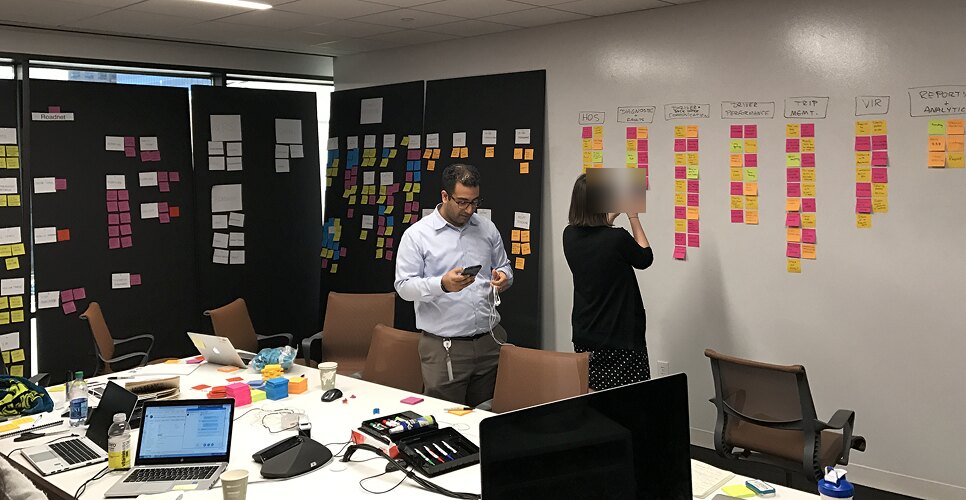
At Omnitracs this ran across teams from several acquired companies, folding one ecosystem back together and finding where functionality was duplicated, where the same word meant two things, and where two organisations had drifted apart simply because of how they used a product. I lean on a move I call book-ending: books need something on both sides or they fall over, so whenever somebody names a function I ask what comes before it, what comes after it, and what else it changes. Rooms leave with a definition list and a long document covering the roadmap, how the pieces connect, and which products across the acquired companies are genuinely symbiotic. The quiet win is that the human interpretation layer between departments stops being necessary.
In the portfolio: Omnitracs Kalkomey SPOTIO SNHU PHZME Cubby
Where AI earns its place in your product, decided by the people who know the workflow rather than by whoever read the most about it.
What's different now. Nobody is short of AI ideas. The work is picking the two worth funding and being able to say clearly why the other eight are not, in language the people who pitched them can accept.
Pre-work is mandatory. Everyone arrives having worked through the personas and written down ideas, and leadership names the areas they already want opened up so those get real time rather than a corridor conversation.
Only half of each day is the room. The rest the teams spend back in their own space, so the thinking keeps going and the unknowns get chased overnight and reported at the top of the next morning. In the room it is time-boxed: everybody's point of view against one problem, everybody heard, everybody asked questions. Then we split into groups and either draw the experience or write the story of somebody using it, so the people who do not draw are not quietly left out.
At SPOTIO the history had been that the group got talked to and then executed. They had never had a say. Senior leadership were taken aback by how much everyone in the room talked once they did. The strongest ideas went to real end users as markups with one question attached: would you pay a dollar for this. Four one-page briefs landed within four days, each signed Author(s): Workshop Participants. Omnitracs ran a machine learning proof of concept the same way, and at TPN it went at displays and interactions, using AI to shape what a shopper sees and what the product learns back.
In the portfolio: SPOTIO Omnitracs TPN
Teams in different regions and different functions get one vision, one set of norms, and a real understanding of what the others are up against.
What's different now. Regions are adopting AI tools at completely different speeds. One office has rebuilt its workflow around them and another has not started. That is a new kind of drift, and it shows up as misalignment months before anyone gives it a name.
This runs after leadership has named the north star, and it is the session that turns an announcement into something people can act on. Every department arrives with a playbook and a road show: who we are, what we do, what we are working on right now.
Then it becomes translation. What does the north star actually mean to this function, this region, this person. Leadership puts the destination up and asks how do we get there. The team turns around and says, from where we actually are, here are the roads. That exchange only happens if the room is safe enough for someone to say the honest version out loud.
People leave knowing what part they play and how the parts add up to the product. It takes a village, and here that is the output rather than the slogan.
In the portfolio: Omnitracs Kalkomey SNHU SPOTIO PHZME
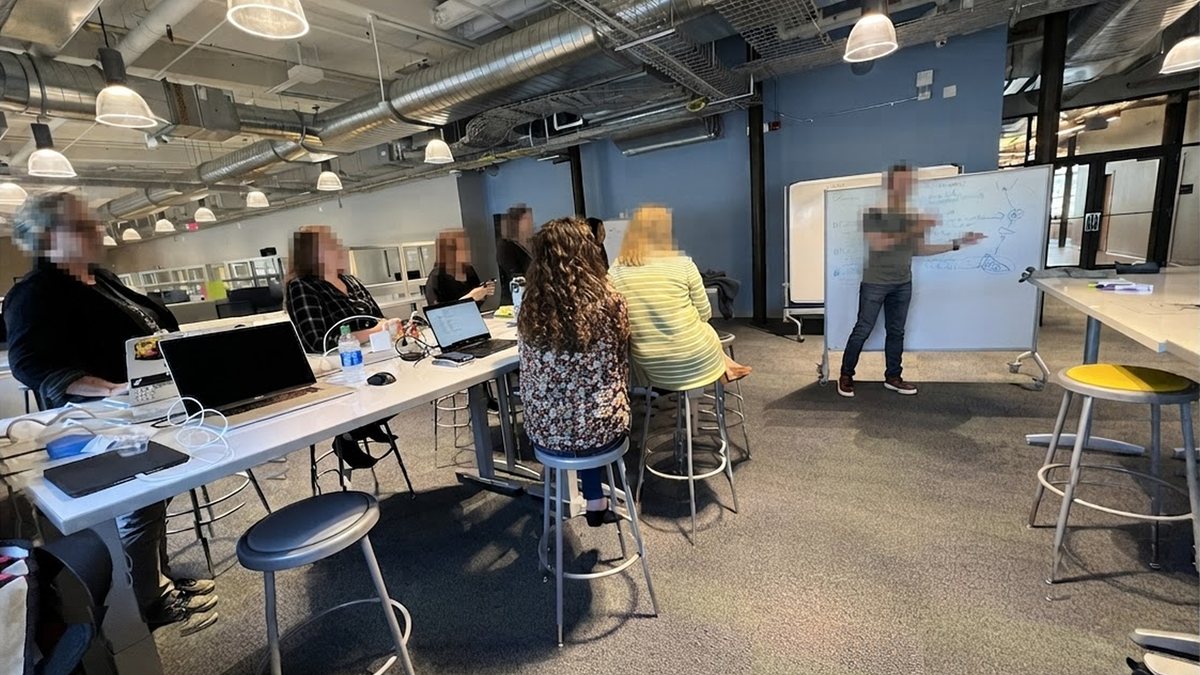
Everybody arrives with ideas from their own vantage point, and the room builds on them until something nobody brought alone is standing there.
What's different now. The futures people sketched in these rooms two years ago are shipping. Scenario planning stopped being theoretical, which makes the sessions shorter, more concrete, and much easier to act on at the end.
The format is closer to an improv studio than a strategy meeting. Somebody puts something up and everybody else piles on, working one subject or several, always from their own vantage point first.
That is deliberate. The ideas that survive are the ones four people with four different jobs have already built on, which means four people are invested in them before anybody has funded anything.
In the portfolio: SNHU SPOTIO Kalkomey Omnitracs PHZME
Problem to a prototype in front of a real person. Shorter than it used to be, and heavier in the places that still decide the outcome.
What's different now. This is the big one. The five day sprint was designed when prototyping was the bottleneck, and it has not been for a while. Building is cheap now, so the week moves its weight off make it and onto the two things that are still hard: deciding what is worth building, and getting it in front of a real person before anybody falls in love with it.
I built the wheels while the truck was on the road for this one. It is the most recent of these and it is still moving, because the real job is working out how new capability sits alongside the ceremonies a team already runs.
The questions that matter are not about tooling. How much of this is already inside your organisation, where are the openings, and what does an opening even mean for a company your size. Those three answers change the shape of the week far more than any framework does.
Some of it is people rather than process. The honest version is that the ground moves whether or not you do, and it goes much better when people get to move themselves. Giving them the room to do that is most of what this is for.
In the portfolio: SPOTIO
Five rows across the journey. Customer, staff, product, policy, and everything happening backstage to make it work.
What's different now. The backstage row is where AI actually lives, and most blueprints still draw that row as a person. Redrawing it is usually the moment a room realises which handoffs quietly stopped being human.
Subject matter experts bring what they know, and the conversation walks the pipeline from the top, or the customer's journey with the product from first contact onward.
Everyone leaves able to point at the gaps: between departments, and between the processes that are supposed to carry a customer along. It lands hardest with customer experience people, who are usually the ones quietly inventing a workaround for whichever part of the application, or the company, does not quite join up.
What you have, what you actually use, what is duplicated, and the plan to get to one system engineering will adopt.
What's different now. The foundations are unchanged: tokens, the Lego blocks, the pieces underneath. The route in changed. A lot of it can now be pulled straight out of the code and the front end library rather than drawn first, so this stopped being a design-heavy exercise and became a fifty-fifty room, product design and front end engineering together. That is also why it now gets adopted.
Before that shift, at Omnitracs, Kalkomey, SNHU, Citi and PHZME, this was the traditional version: implement the tokens, organise the system, build out the blocks, hand it over.
At SPOTIO it ran the new way. Same foundations, different route in, both functions in the room from the first day rather than the last.
Tested throughout against one question: can a new customer be configured without a designer in the room. The answer decides whether what you have is a component library, a kit, or a rules engine, and those are three different jobs. Pairs with the design maturity read, which scores where your function sits before we start.
Three hours, hands on, building an app without a laptop. No technology, to build technology.
What's different now. When anyone can generate a screen in a minute, the scarce skill is knowing what to ask for. Taking the laptop away is the fastest way to teach it.
Everyone leaves with written inputs for three documents and a paper prototype in a bag, which is the part that surprises people.
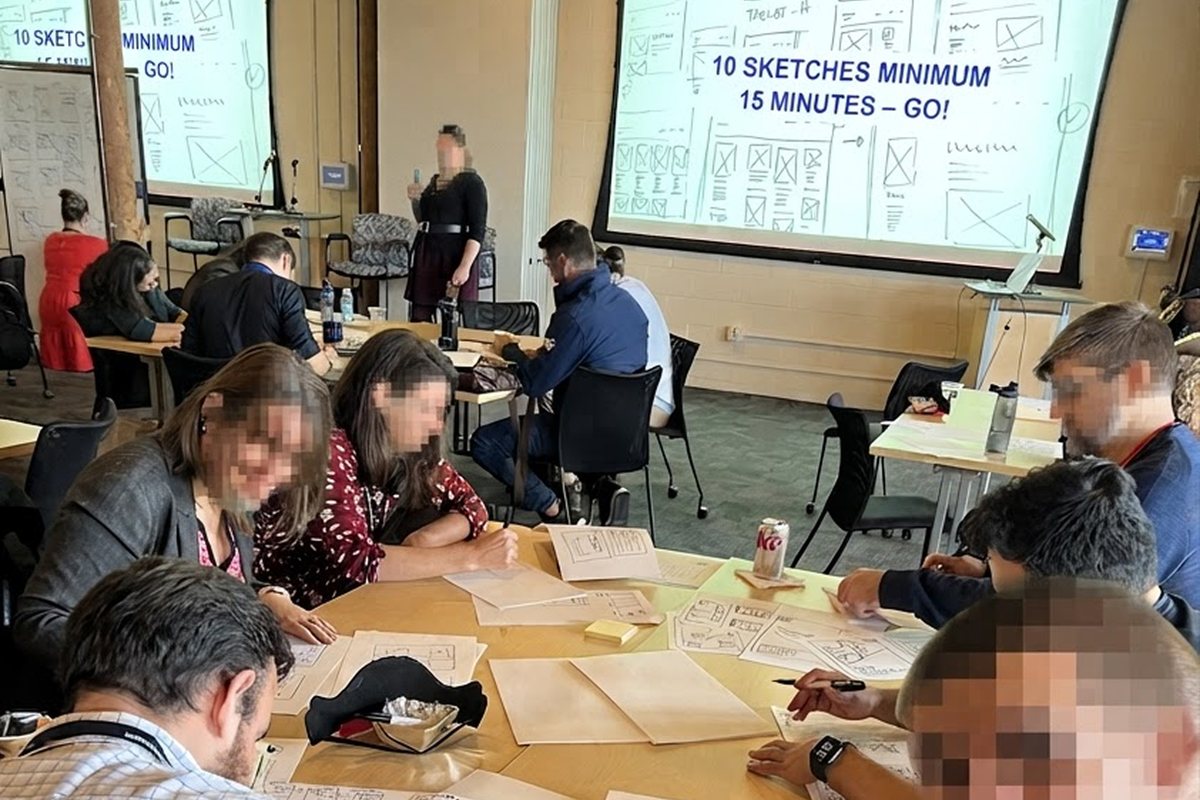
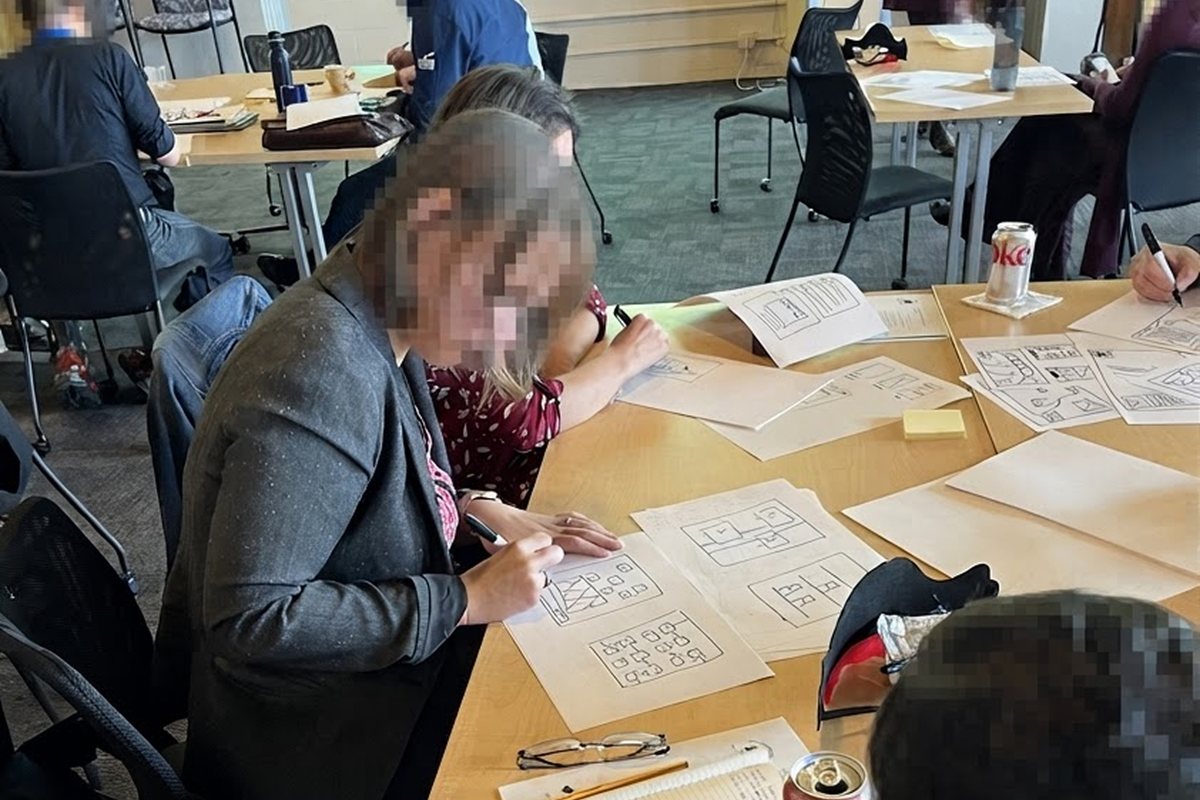
The method is older than the packaging. Paper-first sessions ran at SNHU and Citi long before this had a name, and the discipline is the same one in the photograph: sketch before you build, in volume, on a clock.
It is written now for campuses and early career teams, with a second chapter, AI Built In Order, for anyone who wants to turn the paper into something a machine will actually build. Campus partners run their own booking and marketing, and there is a pack for that.
All of these are written up and ready to run. They sit behind the nine above because they overlap with them, or because they exist to solve one specific problem rather than to be shopped for. Ask about any of them on the call.
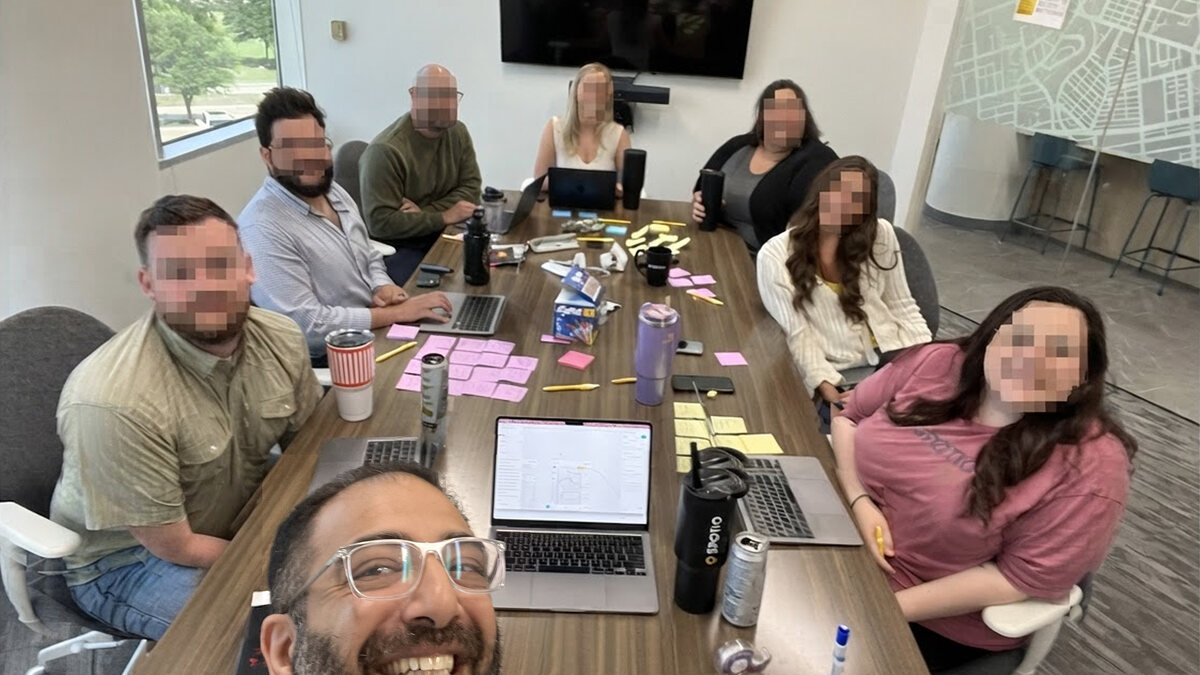
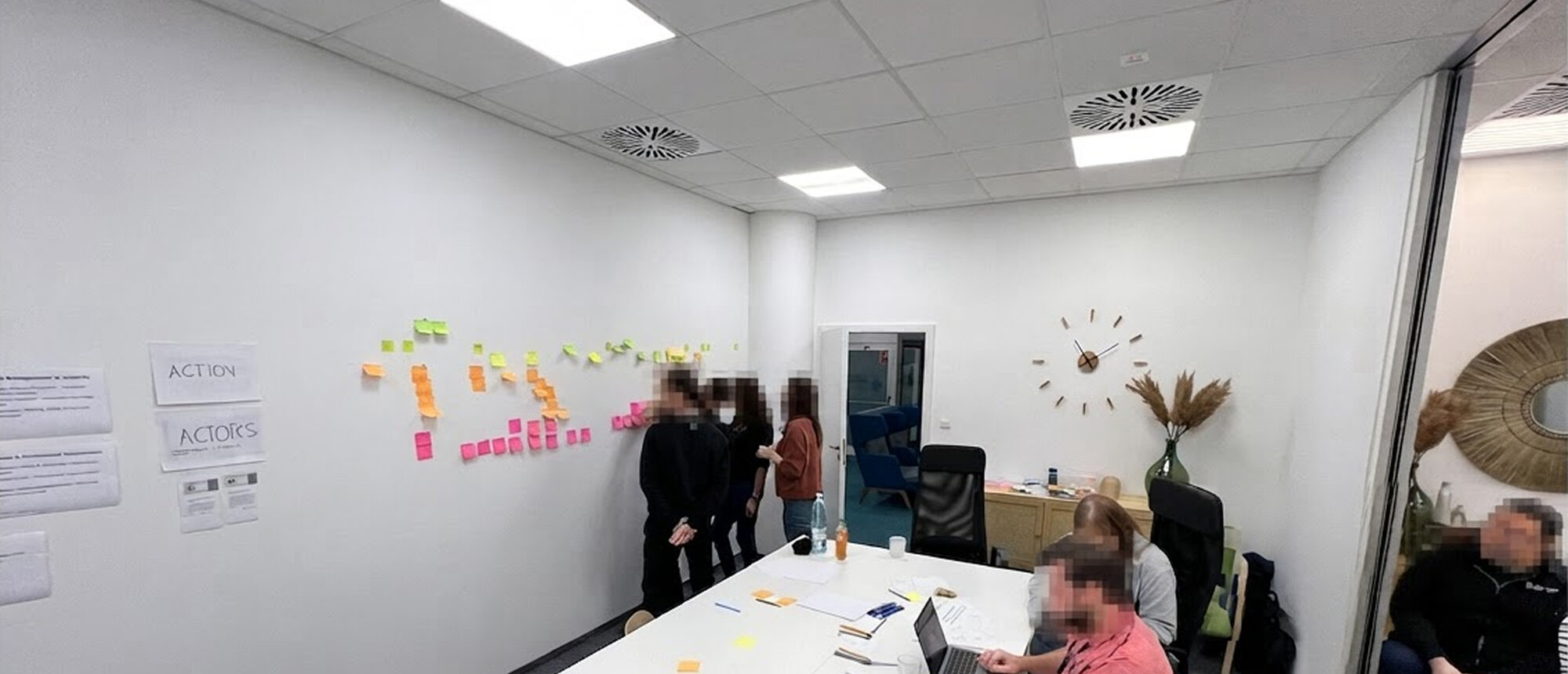
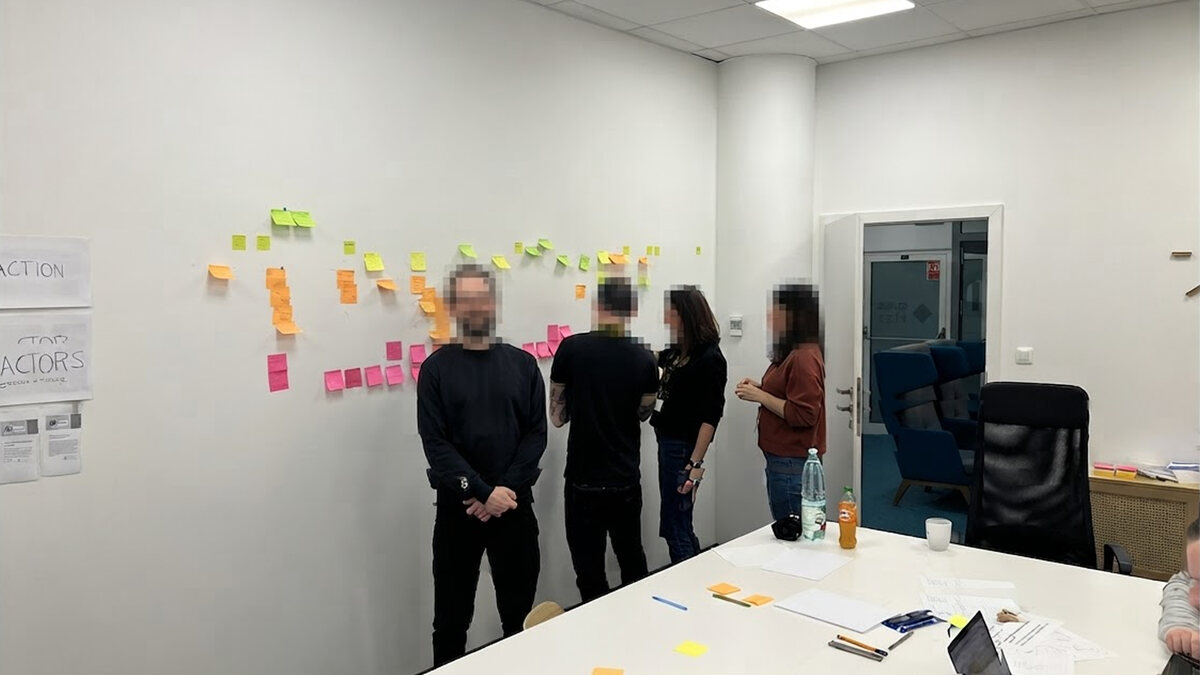
The brief named two people rather than a technology: a canvasser and an account manager losing their day to repetitive work. Pre-work was mandatory with a deadline five days out. The room worked a four colour wall with printed labels reading ACTION and ACTORS, where the app and the AI were written in as actors alongside the humans.
Four one-page concept briefs landed within four days, each quoting the sticky note it came from and each signed "Author(s): Workshop Participants". The first share of every day ran under a no questions rule so nobody senior could close down a half formed idea, and observers were given three specific things to write down instead of a chair. Everybody had a voice, every voice went down with a name on it, and nobody had to argue afterwards about whose idea it was.
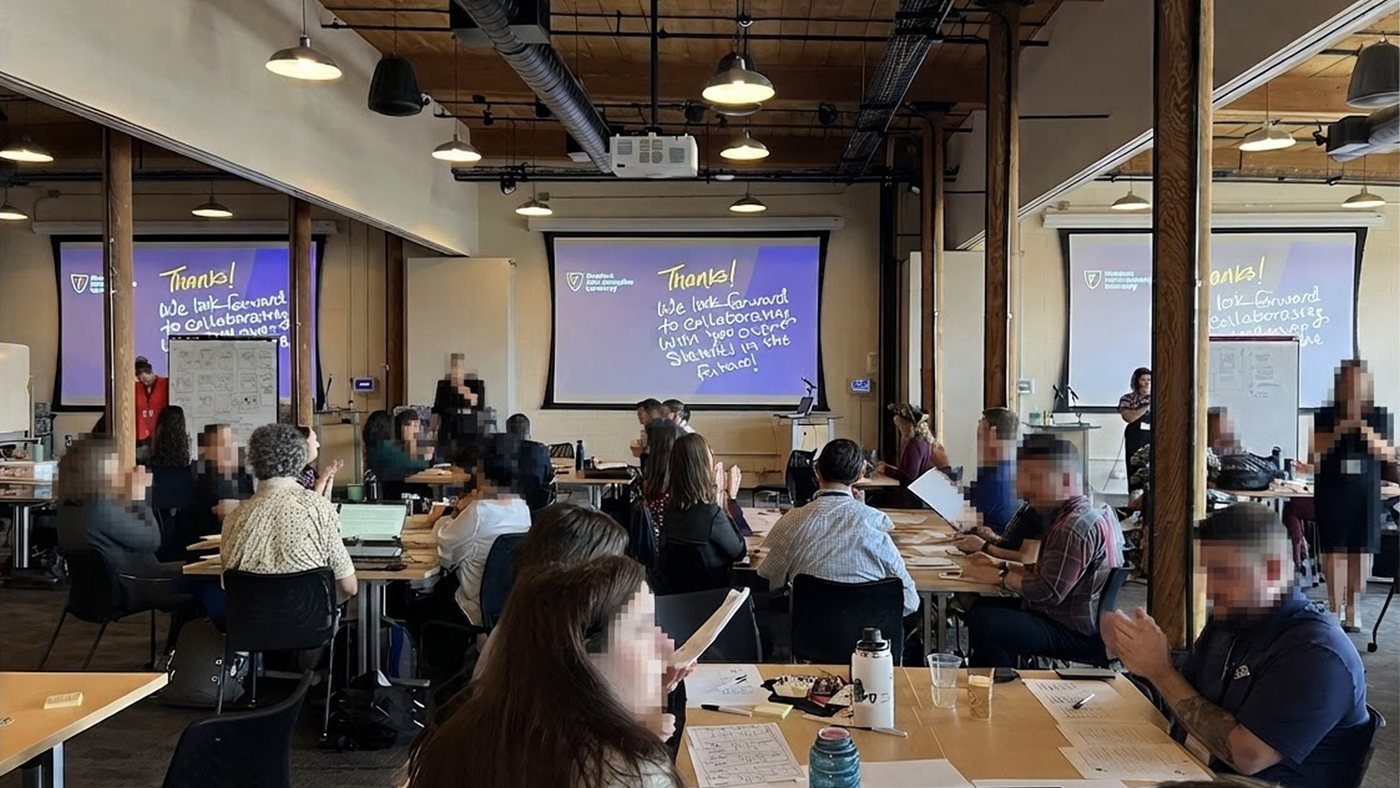
Ten participants split openly into active participants and observers, four steps of pre-work, a written facilitation script, and a day by day arc from ideation to a tested concept. People were seated and grouped by background on purpose, so departments that never work together were working together by design.
The shape was apart, then back together. Groups go off, return, share, connect the dots, and then look at the whole ecosystem as one room. What we kept hearing was a version of "I never knew this department existed or what they did." By the end there were already emails moving between departments, shortcuts and solutions being handed across, and people discovering they were duplicating each other or were further ahead than they thought. It also gave everyone a single view of what was genuinely in flight, which is why ideas to improve other teams' projects kept arriving afterwards.
This was a group effort and I was one of the people leading it. My name is printed on the board as one of two facilitators.
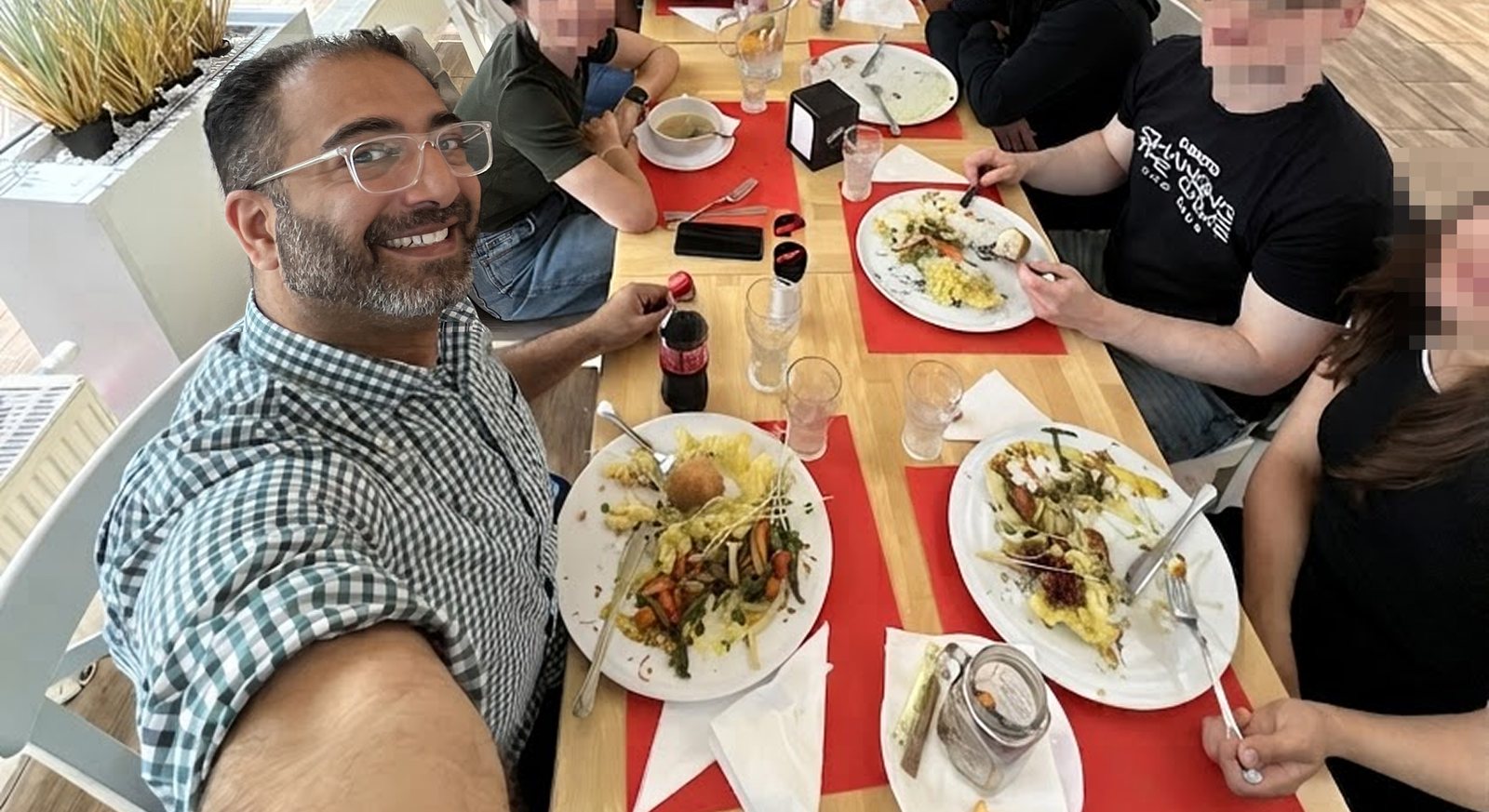
The wall is the artefact. The long lunch afterwards is where the silo actually comes down.