Priced Like a Toy, Built Like a Tool
I set my price by looking at the wrong shelf. The number felt right, and it was aimed at a customer I do not actually have.
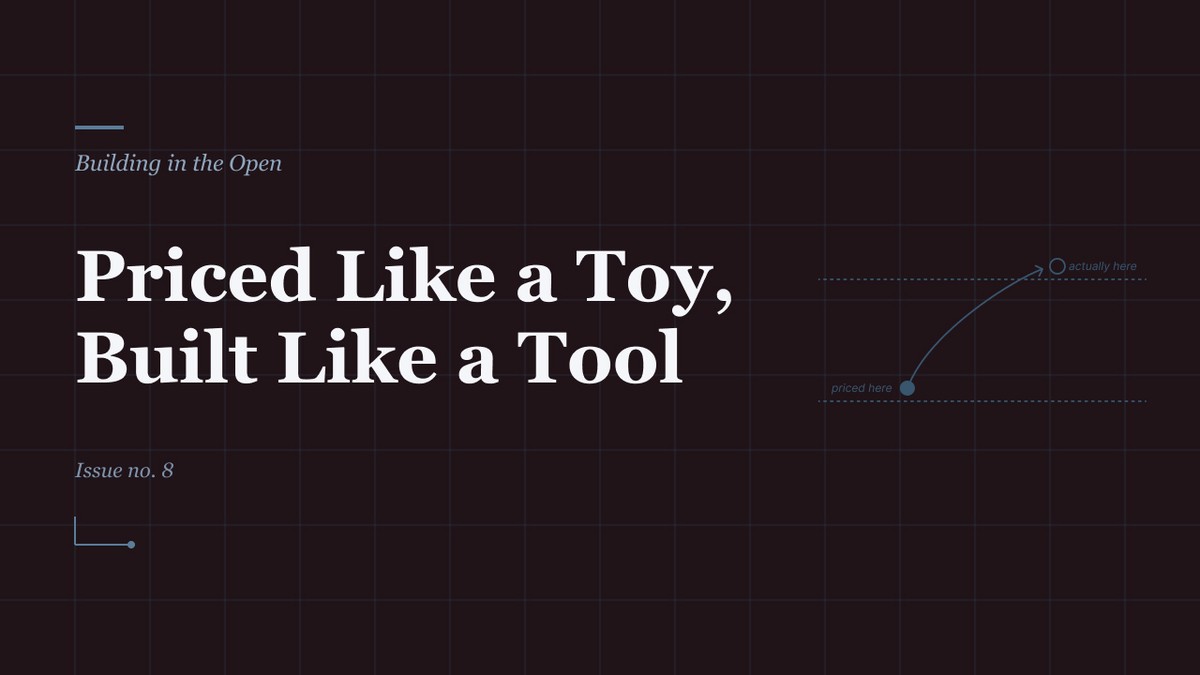
I priced my app for a customer I do not have. It took me a while to notice, because the number felt completely reasonable.
When you decide what to charge, you glance at the shelf next to yours. I built a curated, locked-down video app, so I glanced at other video apps for families and set a price in the same neighborhood as those. A few dollars a month. It felt right.
The problem is that those apps live on a shelf where they compete with free. There are good, free versions of "kid-safe video," backed by enormous companies. If you are on that shelf, your price is pinned near the floor whether you like it or not, because the thing next to you costs nothing.
But Cubby is not really on that shelf. It is for caregivers of teens and adults with autism and intellectual and developmental disabilities. And the tools those families actually rely on, the communication apps, the scheduling and sensory tools, are not free and are not cheap. Families in this world are used to paying real money for something specialized that genuinely helps, and they often have funding to do it. Those tools, not the free video apps, are my real neighbors.
So I had done something quietly backwards. I built a specialized tool for a market that expects to pay for specialized tools, and then I priced it like a mass-market toy competing with free. I was cheaper than the products I actually sit beside, for something more specialized than any of them.
The lesson is not "charge more." The lesson is that your price is a claim about which shelf you are on, and if you pick the wrong shelf, the number will feel fine and still be wrong. Before you set a price, figure out who your customer's real alternatives are. Not the products that look like yours, the products that solve the same problem in that person's actual life. That is the shelf you are on, and that is the shelf whose prices matter.
I am still working out the right answer, and I am doing it the honest way: by asking the people I built this for what it is worth to them, before I decide for them. But I already know the first mistake was letting the wrong shelf set the number.
Look at your product for a second and ask: what shelf did I price this on, and is it the right one?
I write Building in the Open about designing and shipping a real product in public, one honest week at a time.
See what I'm building → cubbyplaylist.com
First published on LinkedIn on 6 October 2026. Read the comments there →